Tracing Player Pathways Through Layered Incentive Structures in Mobile Gaming Platforms
Written by Jonas Russell · Aug 20, 2026
Tracing Player Pathways Through Layered Incentive Structures in Mobile Gaming Platforms
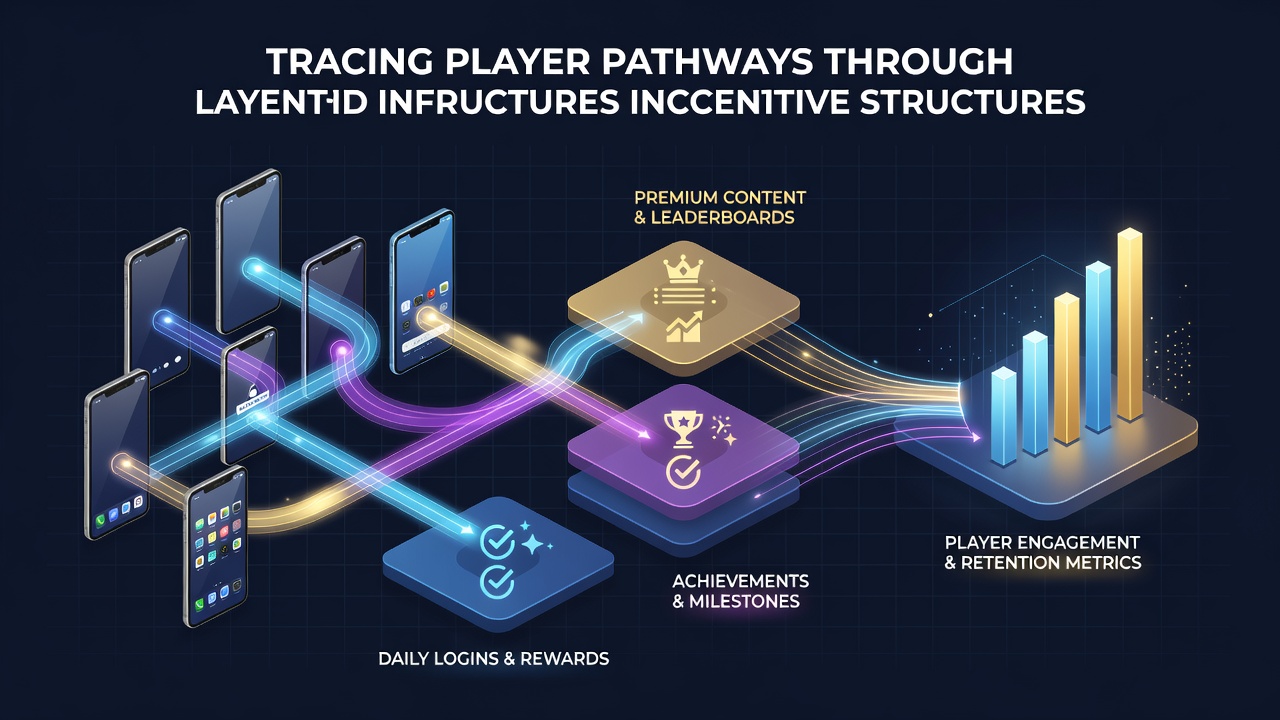
Mobile gaming platforms deploy layered incentive structures that direct players from initial downloads toward sustained activity and spending, and these systems combine daily rewards with progression milestones while integrating competitive leaderboards that foster repeated logins. Developers design entry points around immediate small gains such as starter packs or tutorial completions, then transition users into mid-tier loops involving resource collection and level advancement that unlock further bonuses. Research indicates that such sequencing increases average session duration across free-to-play titles, because players encounter escalating value at each stage rather than flat reward distribution.
Acquisition and Onboarding Layers
Player pathways begin with acquisition campaigns that funnel users through app store promotions and social media ads, after which onboarding sequences deliver quick wins like free currency or cosmetic items to reduce early churn. Data from industry reports shows that titles employing multi-step tutorials paired with instant rewards retain up to 40 percent more users past the first day compared with simpler setups. Observers note that regional differences appear in these designs, because Asian markets often emphasize gacha mechanics at entry while Western platforms prioritize clear goal tracking and achievement badges.
Progression and Retention Mechanisms
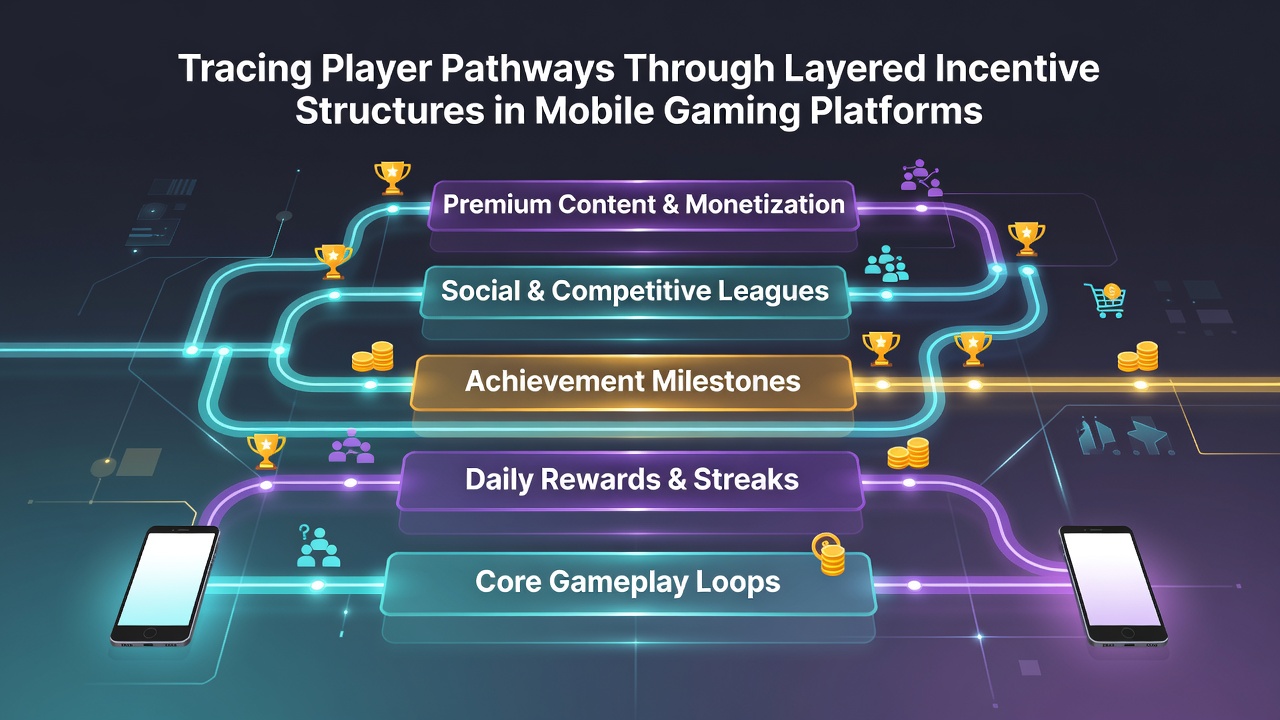
Once players advance past onboarding, layered structures shift focus to retention through battle passes, streak bonuses, and event calendars that reset weekly or monthly. These elements create overlapping cycles where completing one task feeds into another, such as earning points toward a seasonal reward while simultaneously progressing a character upgrade tree. Studies conducted by academic teams at European universities have tracked how these overlapping incentives correlate with higher lifetime value metrics, because players who engage multiple systems simultaneously exhibit lower dropout rates. What's interesting is the way social incentives layer on top, since guild systems and friend referral bonuses encourage players to return not only for personal gain but also to support group objectives.
Monetization Integration Within Pathways
Monetization layers activate once players reach certain thresholds, converting engagement into optional purchases that accelerate progress without blocking core gameplay. Researchers at institutions in North America have documented that well-timed offers placed after milestone achievements generate higher conversion rates than generic pop-ups, because players already perceive value from prior free rewards. Platforms track these transitions through telemetry that maps individual journeys, allowing adjustments such as increasing difficulty spikes right before a limited-time bundle appears. Figures reveal that in August 2026 several major studios plan coordinated global events across multiple titles, aligning incentive calendars to cross-promote spending opportunities during peak summer periods.
Data Tracking and Personalization
Telemetry systems record every interaction within these structures, from time spent on specific tasks to response rates for different reward types, and this information feeds machine learning models that personalize future incentives for each user segment. Government agencies in Canada and Australia have examined data practices in mobile gaming to assess transparency around randomized reward mechanics, and their findings highlight how clear disclosure of odds influences player trust and continued participation. Industry organizations such as those representing digital entertainment sectors compile annual benchmarks showing steady growth in average revenue per user when pathways incorporate both short-term and long-term goals. People who analyze these datasets often discover that hybrid models mixing competitive and cooperative incentives produce the most stable retention curves across diverse demographics.
Regional Variations in Structure Design
Design choices reflect regulatory environments and cultural preferences, because European platforms tend to emphasize skill-based progression while certain Asian markets integrate more social gifting features. Reports from trade groups covering the Asia-Pacific region indicate higher adoption of limited-time collaborative events that reward entire communities, whereas North American titles frequently highlight individual achievement tracking and leaderboards. These variations demonstrate how layered incentives adapt to local player expectations without altering the fundamental pathway architecture of acquisition, engagement, and monetization stages.
Conclusion
Layered incentive structures in mobile gaming platforms form interconnected systems that guide players along measurable pathways from first interaction to ongoing engagement, and ongoing refinements based on telemetry continue to shape how rewards distribute across time and player segments. Evidence from multiple regions shows these designs sustain platform growth while adapting to shifting regulatory and cultural contexts.